The Better Angels of Our Nature by Steven Pinker
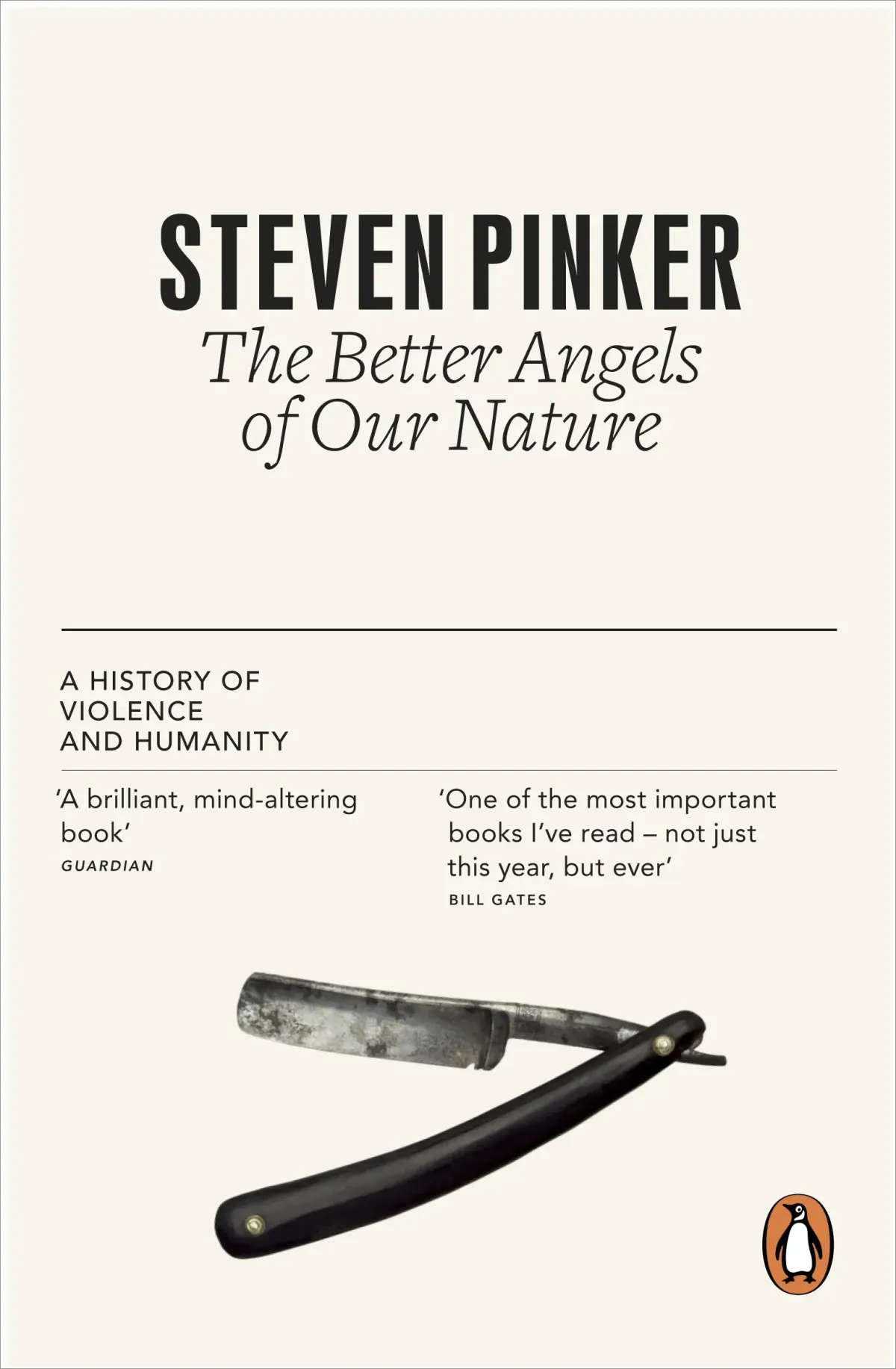
I’m finally making time to read this book. While it challenges the pessimistic narrative that the world is growing more violent, my goal is also to observe how a master researcher structures massive global datasets into a cohesive narrative.
I’ve had Steven Pinker’s “The Better Angels of Our Nature” on my reading list for quite a while now, and I’m finally making the time for it. From the reviews I’ve gathered, it fundamentally challenges the common, often pessimistic narrative that the world is growing more violent. I’m looking forward to tackling it mostly as an exercise in engaging with a deeply complex, contrarian worldview. It’s widely considered a dense and demanding read, and I see this as a great opportunity to stretch my own patience and comprehension when it comes to sitting with difficult, long-form non-fiction.
The book has a reputation for incredible quantitative rigour. Pinker apparently uses vast historical datasets to argue his points, and I’m genuinely curious to see how a researcher approaches a topic of such a massive, global scale. My main goal here isn’t to critique his methods, but simply to observe and learn how such a colossal amount of information is organised into a cohesive narrative. Absorbing that kind of rigorous thinking feels like a valuable way to sharpen my mind and approach everyday information with more clarity.
Another aspect people highly praise is how the book forces readers to confront their own cognitive biases - especially our natural tendency to fixate on negative news. I am eager to see how Pinker navigates this to maintain a broader historical perspective. But I’ve also noticed some critics cautioning that this overarching optimism can sometimes feel Western-centric or slightly disconnected from ongoing systemic struggles. Let’s see if I can keep a balanced view as I read.
I have also read warnings that his specific definitions of violence might be somewhat narrow, potentially excluding modern nuances of conflict. Rather than letting that deter me or going in actively looking for flaws, I just want to understand the framework he chose and why he chose it. Many reviewers note that even if you don’t agree with every single premise, the sheer depth of the philosophical and historical synthesis is remarkable. I want to experience that synthesis firsthand, letting it challenge my own assumptions about human nature and society.
Ultimately, I’m treating this book as a chance to broaden my horizons for the sake of learning. I know reading and trying to absorb such a monumental work will be rewarding. It’s about cultivating a more holistic understanding of the world and refining how I process complex arguments as a reader. I’m excited to dive in.